Why feed algae to cows?
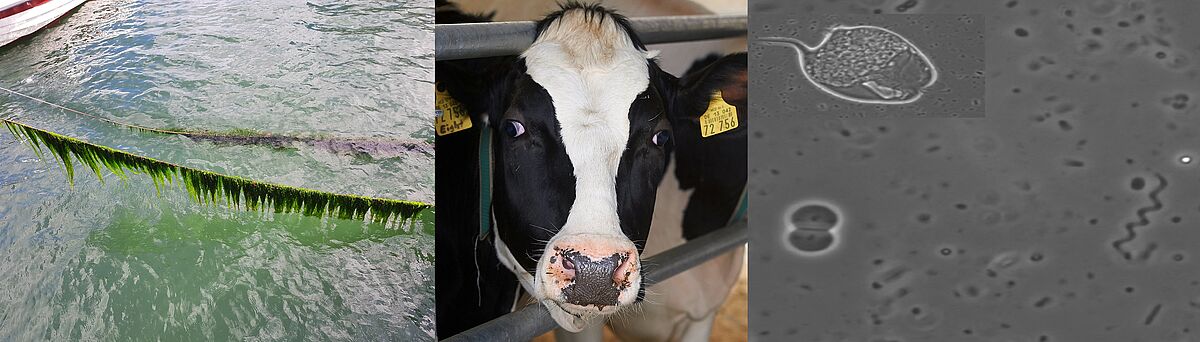
Feeding certain algae species to ruminants may not only promote animal health but also reduce rumen‑specific methane emissions by up to 98%. Algae are rich in unique sulfated polysaccharides and other bioactive compounds. In the rumen, microorganisms convert these components into short‑chain fatty acids (such as acetate and propionate) and other health‑promoting metabolites.
The Alg4Nut Project
To explore how cultivable algae from the Baltic Sea can improve ruminant nutrition and benefit both animals and the environment, Alg4Nut brings together a consortium of leading research institutions in Mecklenburg Vorpommern.
Together, we are working toward five key goals:
Animal health & sustainability: How can Baltic Sea algae affect the health of dairy cows?
Rumen microbiome research: How can algae influence the rumen microbiome? How do microbes convert algal compounds into health-boosting substances?
Biotechnological potential: Which algae-converting microorganisms and enzymes show the most promise for future biotechnological applications?
In-vitro studies: What are the health-supporting and immune-modulating effects of algae extracts in cell culture systems?
Practical application: Is large-scale cultivation of Algae feasible?
Our vision
Alg4Nut will not only advance sustainable livestock production but also help establish a new bioeconomy sector in the coastal and agricultural regions of Mecklenburg Vorpommern. The project addresses the Sustainable Development Goals of United Nations.


Alg4Nut project is funded within the framework of the EFRE program 2021–2027 of the State of Mecklenburg-Vorpommern from resources of the European Regional Development Fund of the European Union. The project started on 01.04.2025 and will continue until 31.03.2029.
Aktenzeichen
EXF-25-1011 to EXF-25-1018