Work Package 5: Identification of Methane-Producing Archaea

The greenhouse gas methane is a major product of rumination (ruminant conversion of cellulosic biomass). As cattle can produce up to 500 litres of methane per day per animal, their contribution to the anthropogenic methane emission is significant (30%). The reduction of methane emissions in ruminant farming represents a big ecological and economic challenge. In previous studies, certain species of algae have been shown to reduce methane emissions, putting algae into the focus of this project.
Prof. Dr. Tim Urich and his team are investigating how algae supplementation affects the community composition, abundance, and gene expression of methane-producing archaea in the rumen and large intestine. The work focuses on three main objectives:
1. Determination of Methanogen abundance
The abundance of methane-producing archaea in the rumen and large intestine will be quantified using established qPCR assays targeting the methanogenesis marker gene mcrA.
2. Characterization of community composition
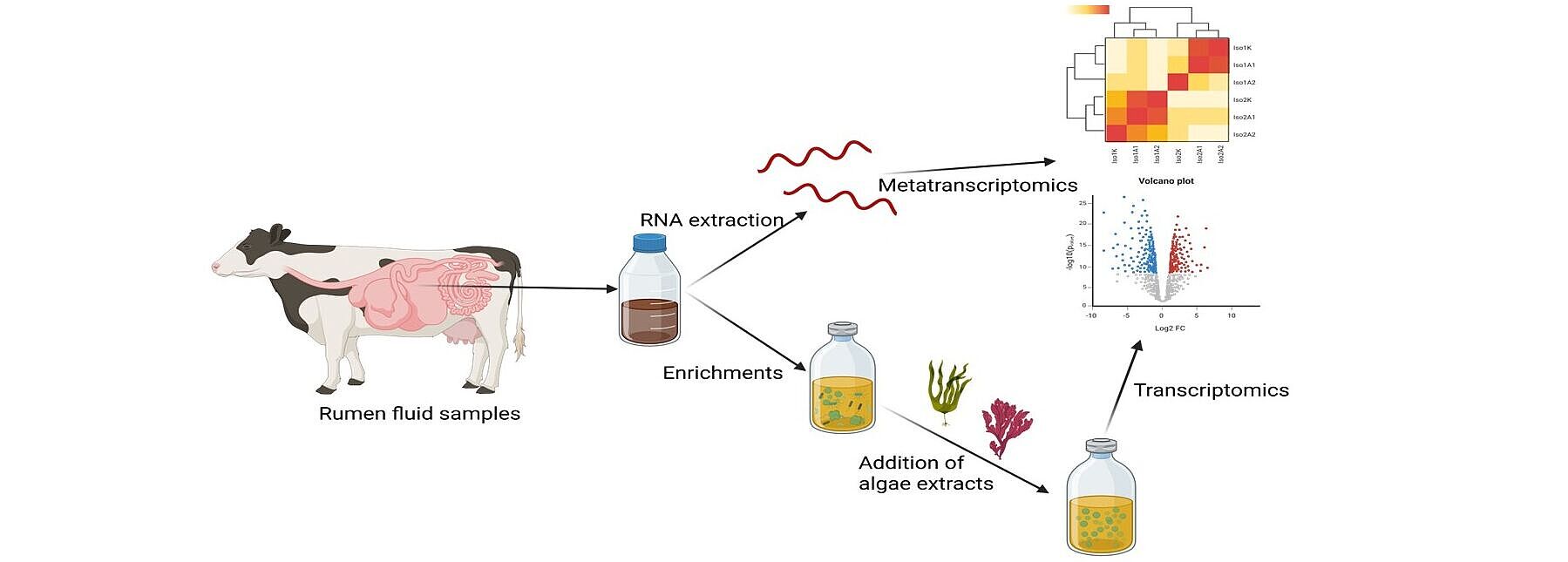
Community composition will be derived from 16S rRNA gene libraries (data provided through Work Package 4). In addition, metatranscriptomes will be taxonomically and functionally characterized. Together with metagenomes and – proteomes (Work Package 4 and 6) the metatranscriptomes will lead to deeper insights into methanogen diversity and activity.
3. Evaluation of direct effects of algae on methanogenic archaea
Representative methanogenic archaea will be enriched and isolated from cattle rumen. The gained isolates will be exposed to varying concentrations of algae extracts and their impact on methanogenesis will be examined physiologically using growth patterns, gas chromatography and gene expression analyses based on single cell transcriptomes.